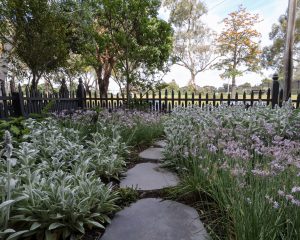
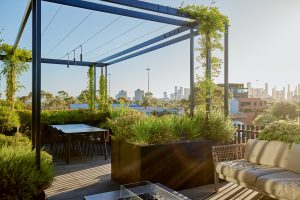
A garden with too many focal points has none. The eye needs somewhere to land, and when five candidates. A sculpture, a specimen tree, a water feature, a pergola, a striking pot. These are all crowded into one courtyard or a single section of the garden, it settles on none of them properly. The same elements spread across a larger rear garden can each hold their own. Packed into one small space, they compete instead. The result reads as busy rather than intentional, no matter how good each individual element is on its own.
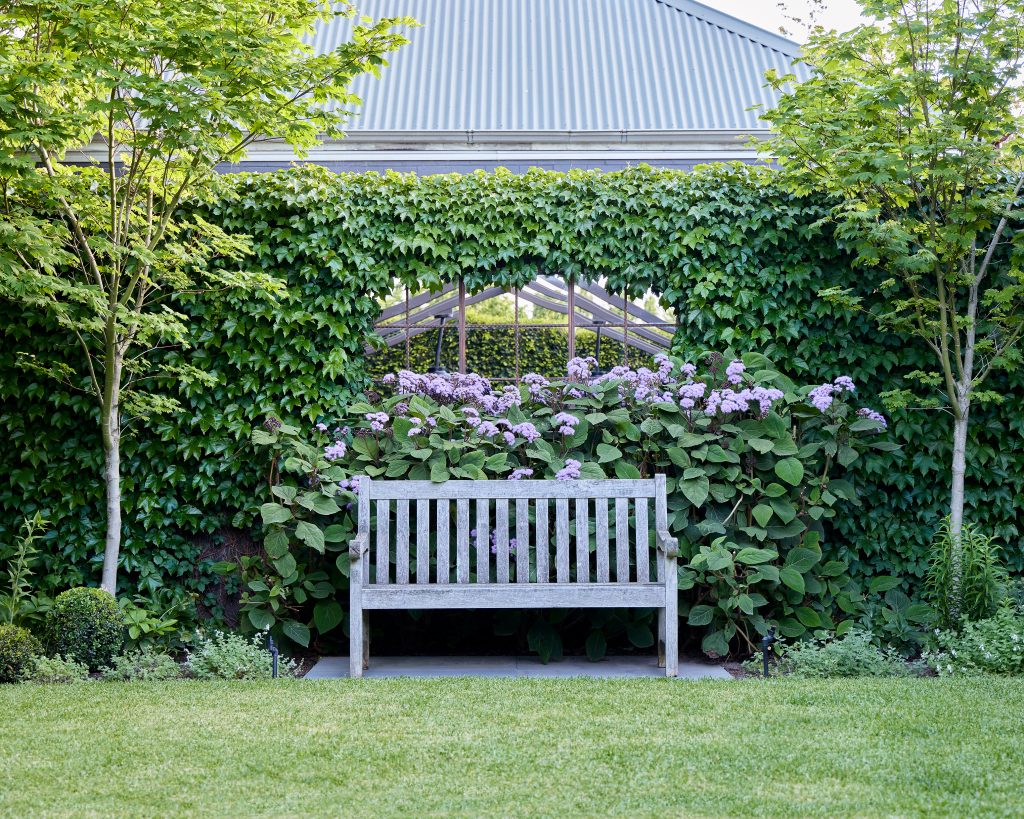
Most residential gardens are best served by a single primary focal point, with everything else supporting it rather than competing with it. This doesn’t mean a garden can hold only one feature of interest. A mature tree, a bench seat and a change of level can all coexist. But one should be doing the work of drawing the eye, and the rest should be arranged to lead toward it or frame it.
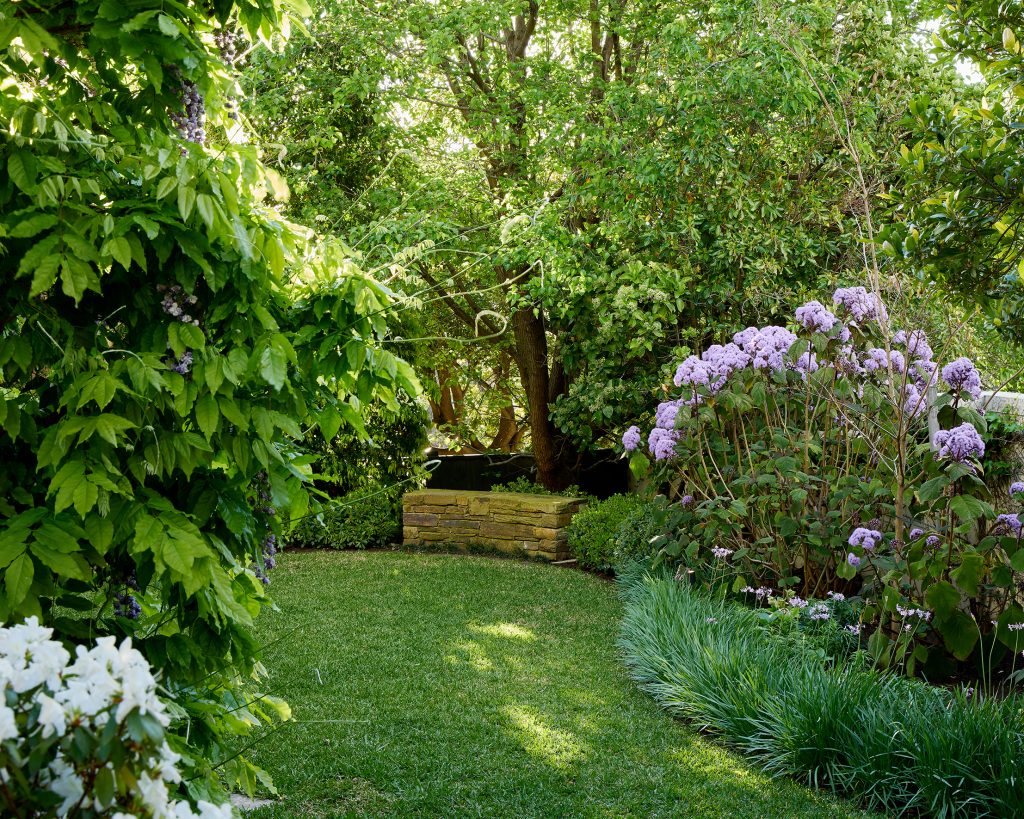
A focal point earns its position through sightlines, not through scale or expense. The strongest placements are usually the view from a key window, the termination of a path, or the point a garden reveals itself from the entry. A mature tree positioned within a lawn will outperform an elaborate feature placed where nothing leads the eye to it.
This is also where the first design consultation does most of its work. Reading where the eye already wants to go before deciding what to put there.
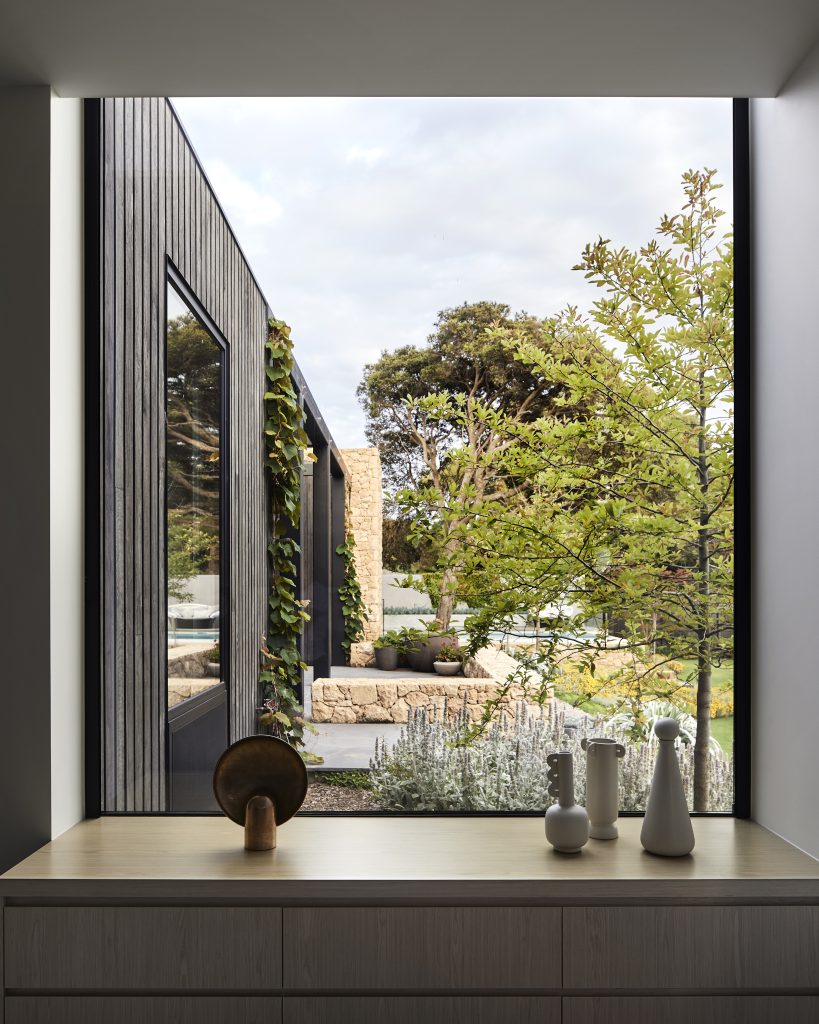
Once the primary focal point is set, everything else in the garden should be secondary interest rather than a rival. Planting texture, a change of paving, a considered seat, these reward a closer look without asking for attention from across the garden. The distinction is between what draws you in and what you notice once you’re there.
Stand at the main point of arrival, the back door, the terrace and ask what the eye goes to first. If the answer is unclear, or if it changes depending on where you’re standing. The garden likely has too many competing elements rather than too few. Restraint, more often than addition, is what resolves it.
Ready to turn your garden into a dream setting anchored by considered focal points? Contact us to book a design consultation.