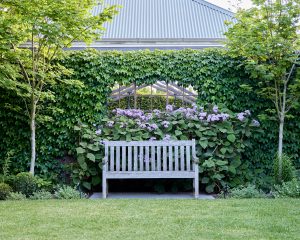
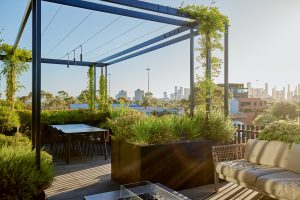
Not every landscape needs excavating and rebuilding from the ground up. Often, the better decision is to identify the elements that aren’t working and adjust them. Rather than starting over. Maybe a garden has the wrong path to the front door, or a rear garden has an existing pool. But no entertaining area to draw you outside. All the elements are good, but new additions would improve the overall outdoor experience.
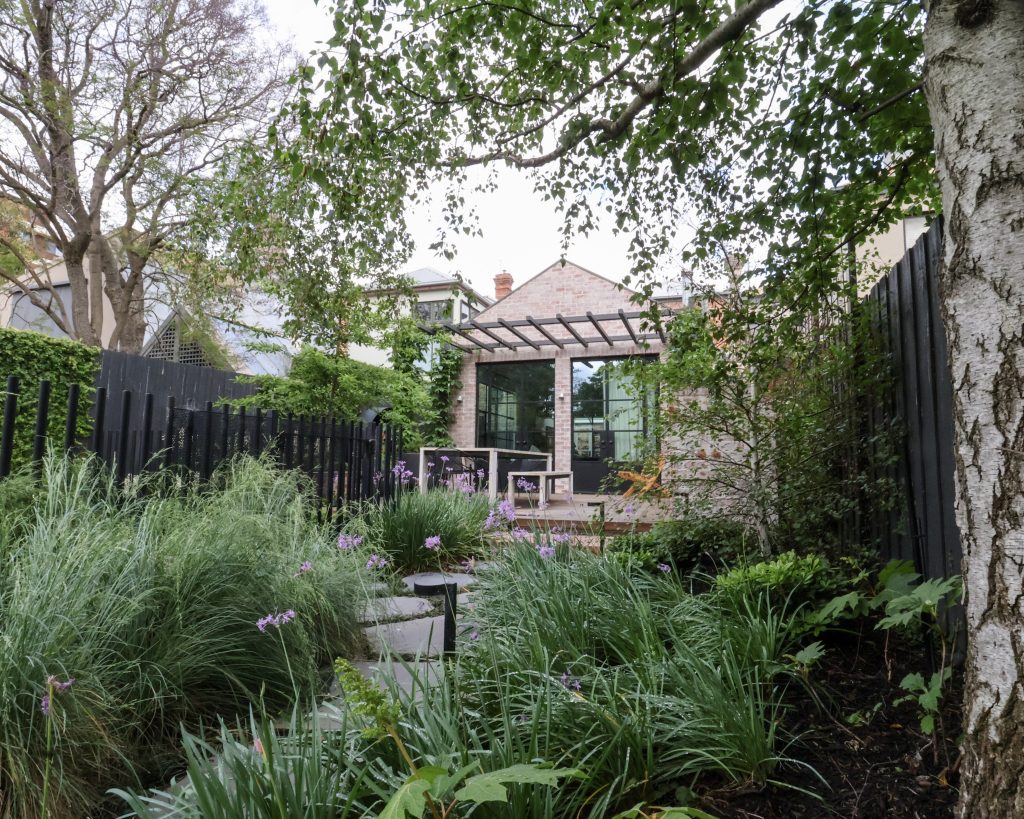
At our Parkville Terrace, the front of the home raised a straightforward question. Did the existing space add anything to the property? No. But was everything about it wrong? Also no. Rather than removing the veranda and front path entirely, we retained both and reconfigured them to be more intentional. Spatially, this made far more sense than starting from a blank site. The existing structure had the right bones. It simply hadn’t been arranged to work with how the space was used, and to make a good first impression.
This was paired with a planting palette designed to make people pause rather than walk straight past, which included Tulbaghia ‘Fairy Star’ and Stachys byzantina. The result is a front garden that makes an impression on arrival, rather than functioning as an afterthought to the rest of the home.
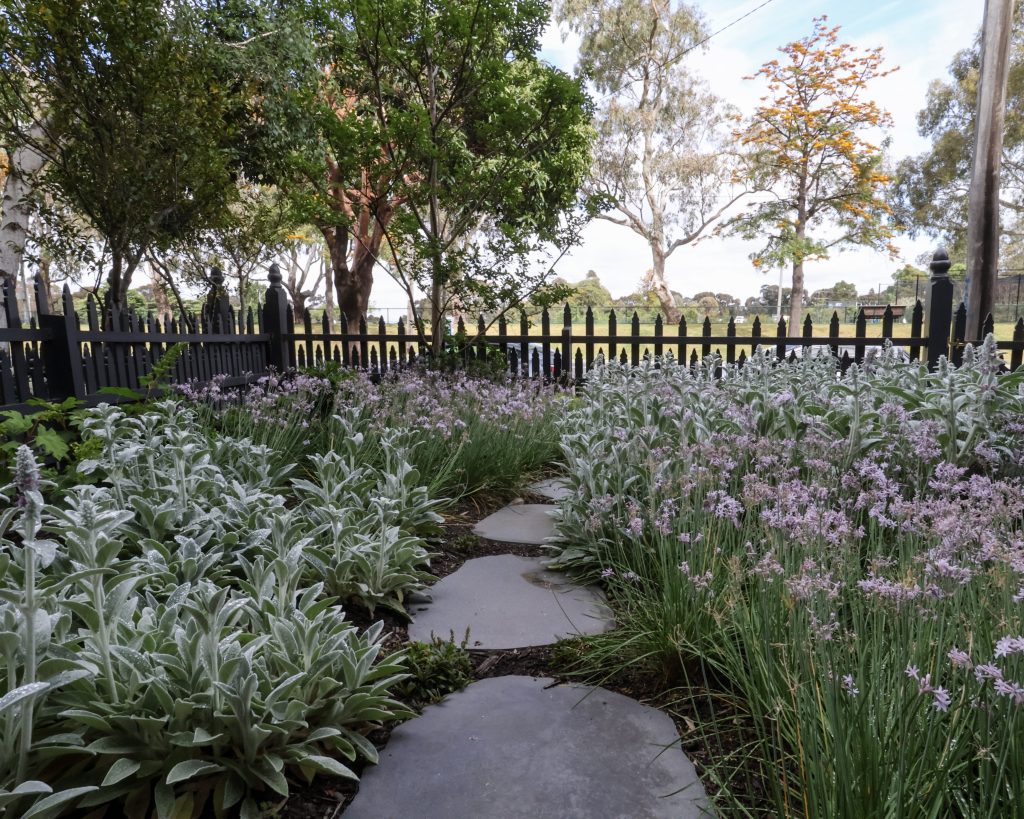
The same principle recurs across other projects. Shifting a front gate to align with the front door. Relocating a path that leads nowhere, or adding one where access to an area has always been difficult. None of these are large interventions, but they are frequently the adjustments that make the greatest difference to how a space actually functions.
Reading a garden before rebuilding it is paramount. This approach depends on being able to distinguish what isn’t working from what simply hasn’t been used well. A garden with poor alignment, awkward access or an underused space doesn’t always need replacing – it needs the underlying logic corrected.
Identifying that difference is often the more valuable design decision, and the one that respects both the site and architecture of the home.
Interested in seeing the full Parkville Terrace project? Click here.