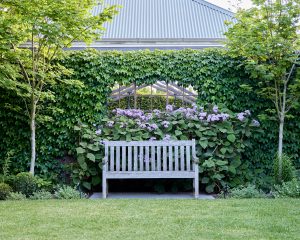
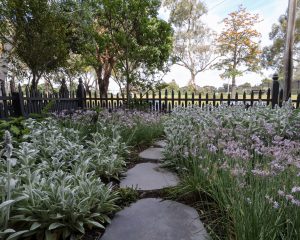
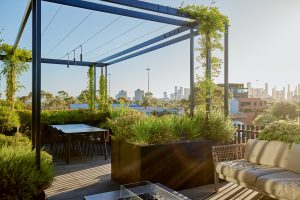
Most gardens are judged the day they’re finished, but that’s rarely when they’re at their best. Plants need time to establish. A hedge planted to form a screen takes a season or two before it actually screens anything. A specimen tree needs years, not months, to develop the canopy it was chosen for.
Materials need time too – timber weathers into a softer tone, stone loses its raw edge, concrete settles into the palette around it rather than sitting apart from it. None of this happens on day one. All of it is the point.
The gap between finished and established
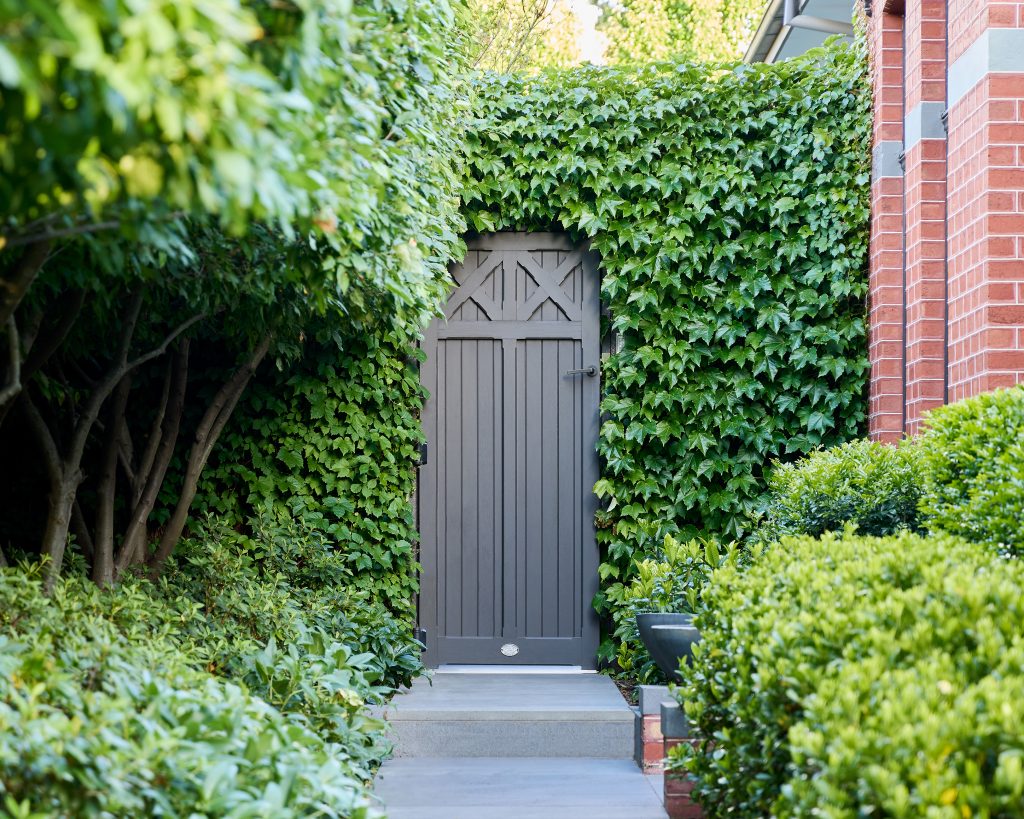
There’s a difference between a garden that’s finished and a garden that’s established, and it’s a difference worth designing for. A finished garden has everything in place. An established garden has had time to grow into its place – for planting to fill out, for hard landscaping to weather in, for the whole space to stop looking assembled and start looking inevitable, as though it couldn’t have been arranged any other way.
Designing for that gap means resisting the temptation to make a garden look complete too soon. It means selecting materials for how they age, not just how they look freshly laid. And it means accepting that a garden’s best years are ahead of it on the day the client moves in, not behind it.
Planting with room to grow
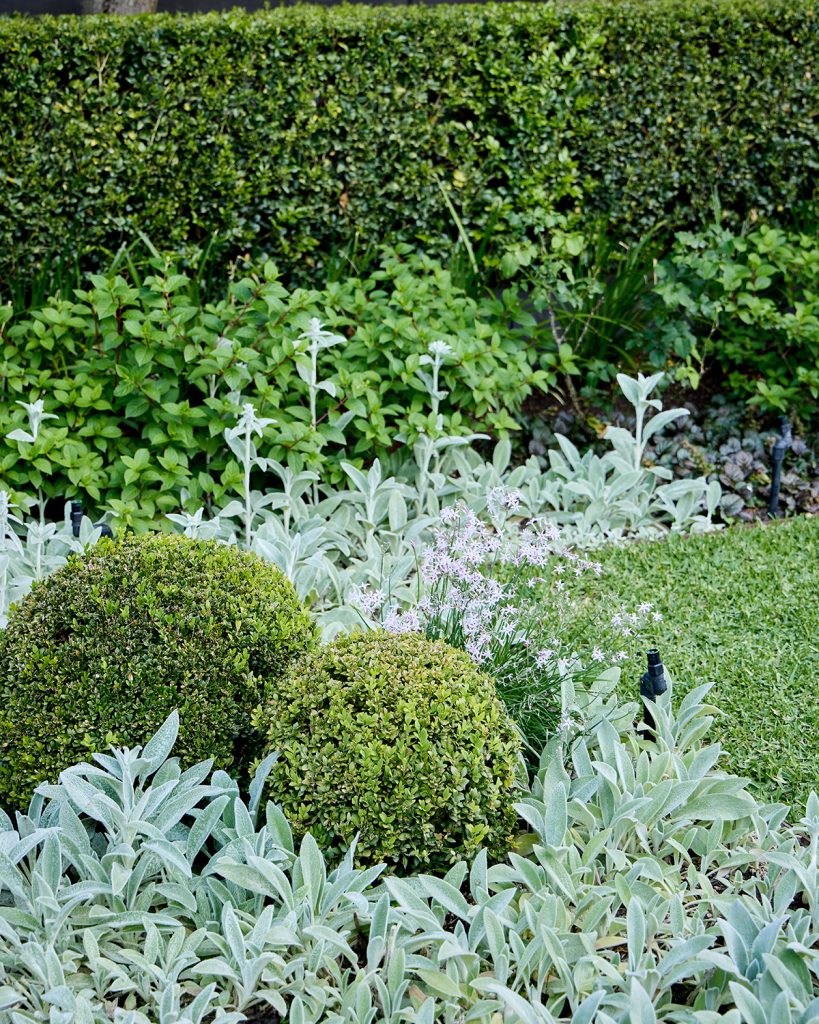
A garden that improves with time is usually a garden that was slightly restrained at planting, not one planted to look full on day one. Specimens spaced for how they’ll look in five years inevitably look sparse in the first year or two, and that’s the trade-off worth making.
Planting too densely to satisfy it space early creates problems that only compound with time. Roots compete for the same soil volume before they’ve had a chance to establish properly. Canopies that were never meant to touch begin to crowd each other, blocking light and airflow between plants that need both to thrive. What looks lush in year one often means stunted growth and disease by year three or four – with the weakest specimens losing out entirely, and the whole planting needing to be thinned or replaced well before it should. A garden planted too closely doesn’t just look crowded. It grows into a maintenance problem, not a mature one.
Designing with the long view in mind
None of this is a reason to be less ambitious with a garden. It’s a reason to be more precise with the design. A garden that photographs beautifully on completion day and a garden that still feels right years later can be the same brief and the best landscape design doesn’t choose between them. Plan for both, understanding that the version you see on completion is only the starting point.
Looking to see these methods in practice? Explore our Camberwell Meadow, built in 2016 and still looking lush and beautiful today.