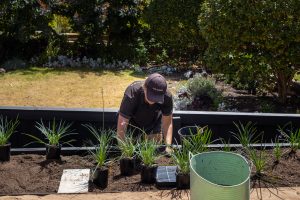
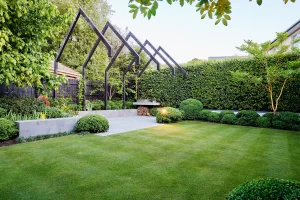
There is a particular satisfaction in stepping outside for dinner and finding half of it already growing. An edible garden is exactly that: a space designed and planted with intention to grow food for the table, built around vegetables, fruits, herbs and edible flowers rather than ornamental planting alone. Done well, it is not a vegetable patch bolted onto the side of a garden – it is part of the design itself, as considered as any border or hedge.
Spring is where the edible garden earns its place. The soil warms, the frost risk passes, and the growing season opens. The question is not whether to plant, but what to plant, and when. Here is what belongs in the dream spring edible garden and why.
Vegetables
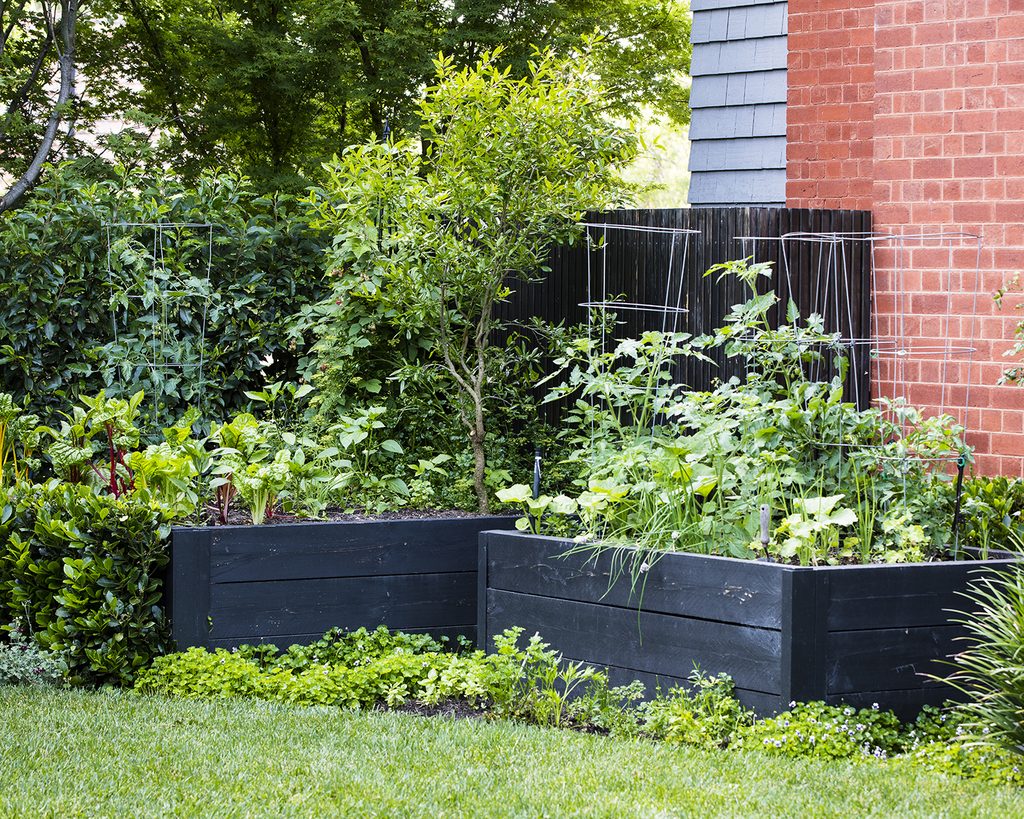
Spring belongs to the warm-season vegetables – the ones that have been waiting out winter for exactly this moment. Tomatoes (Solanum lycopersicum), cucumbers (Cucumis sativus), beans (Phaseolus vulgaris), capsicum (Capsicum annuum) and eggplant (Solanum melongena) all want the same things: warm soil, full sun, and seedlings given the head start of a pot before they go in the ground. Plant too early, while the soil is still cold, and growth stalls before it starts. Timing, here, is everything.
Greens
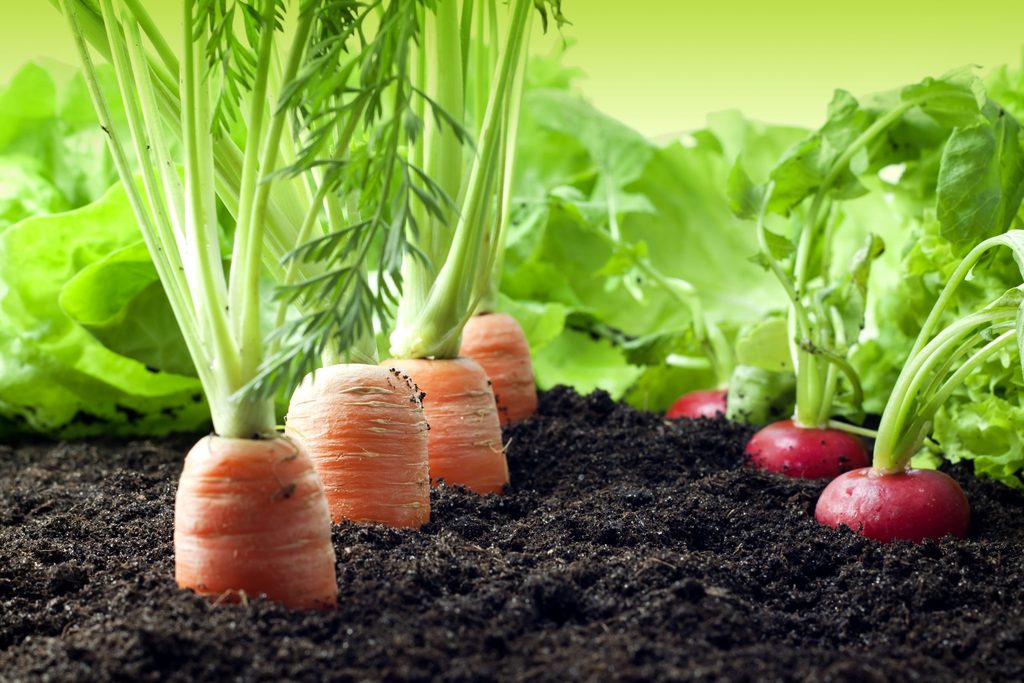
Once the last frost has passed, spring becomes the ideal window for fast-growing leafy greens – crops that reward patience with very little of it. Lettuce (Lactuca sativa), rocket (Eruca sativa), silver beet and beetroot (Beta vulgaris), spinach (Spinacia oleracea), carrot (Daucus carota) and radish (Raphanus sativus) all thrive in the lengthening days, producing tender leaves and roots before the heat of summer changes the equation.
These are the crops that make an edible garden feel productive within weeks rather than months.
Fruits
Spring fruit arrives in two distinct waves. Early in the season come strawberries and rhubarb (Rheum rhabarbarum) – the first taste of the year’s harvest. Later, as the season builds toward summer, cherries (Prunus avium), apricots (Prunus armeniaca) and mulberries (Morus species) take over, offering a second, sweeter chapter.
Planning for both waves means a garden that produces continuously through spring, rather than in a single, fleeting flush.
Edible Flowers
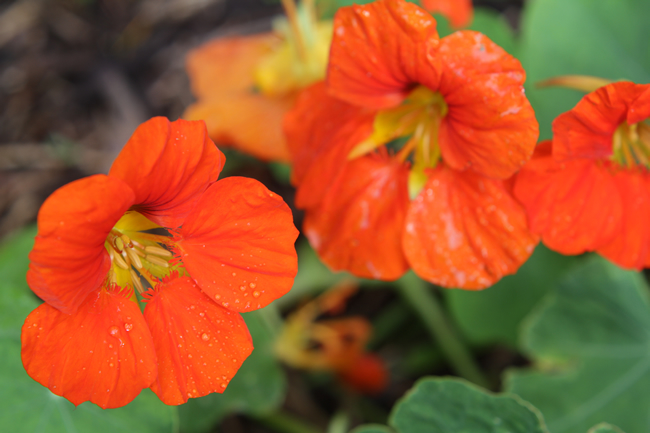
No edible garden is complete without a border of flowers that do double duty – feeding pollinators and the kitchen in equal measure. Nasturtium (Tropaeolum majus), calendula (Calendula officinalis) and viola bring colour to the garden and texture to the plate, their petals as suited to a spring salad as they are to a garden bed. They are the finishing touch that separates a productive garden from a beautiful one – proof that food and design were never mutually exclusive.
Designing for the Harvest
The best edible gardens are not an afterthought at the back fence – they are designed with the same intent as the rest of the landscape: considered for aspect, soil, and the rhythm of the seasons, so that what is planted in spring is set up to thrive through to harvest. That is where good design earns its place.
Ready to see your own spring harvest come to life? Explore 20 spring recipes to make the most of it – or get in touch to start designing a garden that includes an edible garden built for your space. Contact us here.